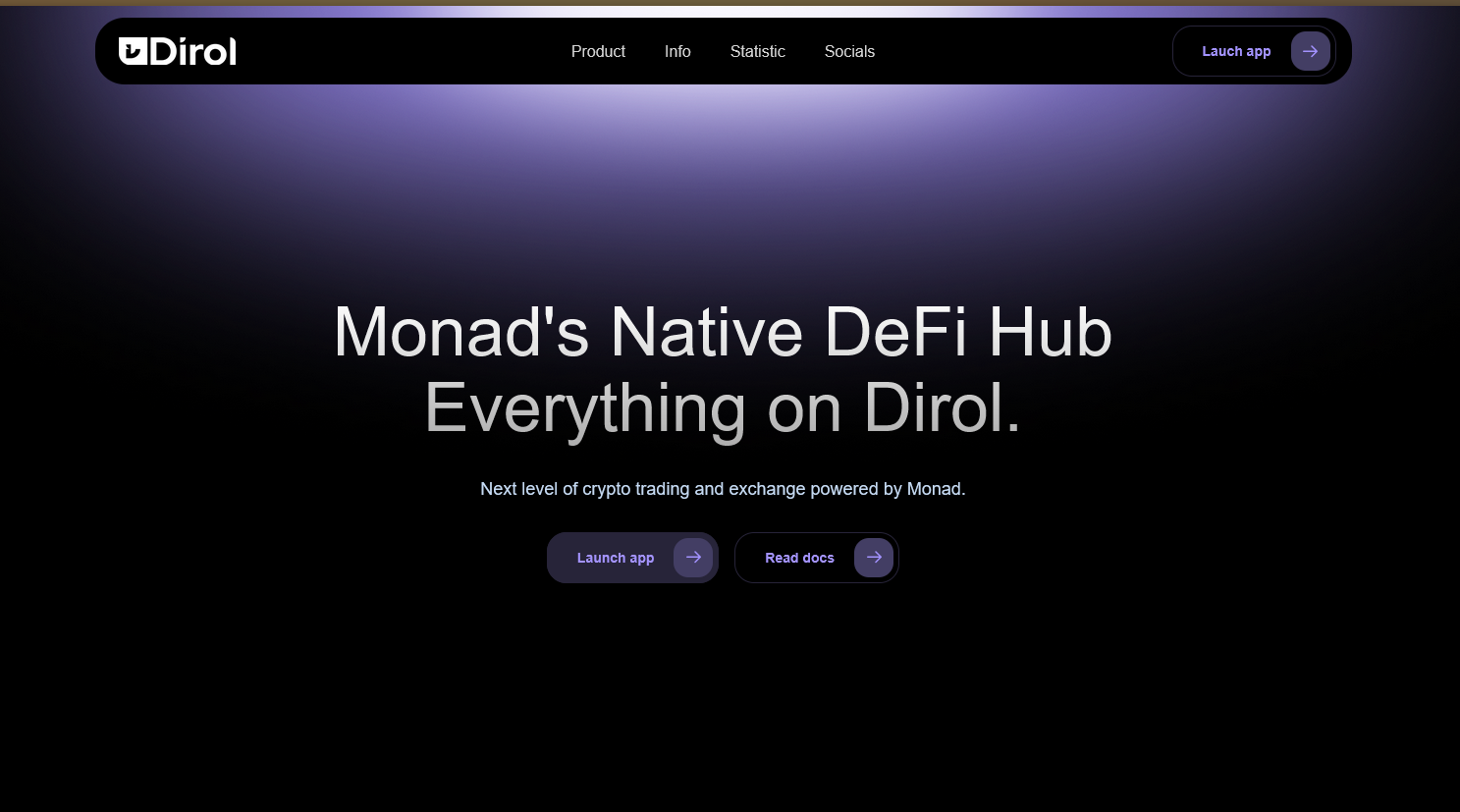

Dirol Protocol Full-Stack DEX Development on Monad
A DevThinks case study on Dirol Protocol work across frontend development, backend development, DApp optimization, and transaction-focused product engineering on the Monad blockchain.
- Client
- Dirol Protocol
- Year
- Service
- Web3 Development, DeFi Engineering

Project Context
Dirol Protocol is a decentralized exchange platform built on the Monad blockchain.
A DEX has a simple promise on the surface: help users trade.
Under that simple promise, the product has to manage wallet behavior, trading states, transaction timing, interface feedback, backend support, and performance constraints. If any one of those feels weak, users lose trust fast.
Nasir's work on Dirol Protocol covers the parts a DEX needs to feel usable and dependable:
- frontend development
- backend development
- DApp development
- DApp optimization
- transaction-focused product improvements
Focus Areas
The work is shaped by five priorities:
- user experience
- security
- scalability
- performance
- transaction efficiency
That means the work is not only about making screens. It also includes the product and engineering decisions that affect how the trading flow behaves when users interact with it.
Engineering Notes
DEX work has a different quality bar from a normal dashboard.
The interface needs to make actions clear before a user signs. The backend needs to support product behavior without slowing the flow down. The DApp layer needs to stay aligned with wallet and chain behavior. Performance needs to be protected because trading products feel broken when feedback is delayed.
Dirol Protocol is active work, so the public case study stays focused on the safe details: full-stack DEX development, Monad, frontend and backend support, DApp optimization, and transaction-focused product improvements.
Stack
- React
- Next.js
- TypeScript
- Solidity
- Web3.js
- Monad
- Node.js
- Tailwind CSS
Why It Matters
Dirol Protocol belongs in the DevThinks portfolio because it shows current full-stack Web3 product work, not only past client delivery.
The useful part is the mix: frontend UX, backend behavior, DApp optimization, security awareness, and transaction efficiency all have to be handled together for a DEX to feel trustworthy.